
Renewable Energy
Photovoltaic power station
Burundi has high solar potential. The average annual sunshine capacity for one fraction (one solar photovoltaic plate) is close to 2000 kWh/m2 a year. It is equivalent of the sunniest european regions around the Mediterranean.
Depending on the mining industry needs, Burundi’s electricity needs, in 2020, go up to 1000 MW. If we don’t consider mining industry requirements, Burundi monthly energy needs are around 70 MW. However, it only produces 30.8 MW.
Hence, due to the continuous economic growth that the country is experiencing, electricity sector has been decentralized. The August 20th, 2000’s law n°1/014 opens the door to private investors.
As the government has set a project to bring electricity in all rural areas, schools, health centers, hospitals and public administrations, business operators can, through the Zone Economique Spéciale Burundi, invest in supplying photovoltaic solar energy or small hybrid thermal-photovoltaic power plants.
Some privates investors projects to install photovoltaic panels in Mubuga (7.5 MW), Bubanza (10 MW) and Gitega (10 MW), are already to be launched soonest.
Hydropower station
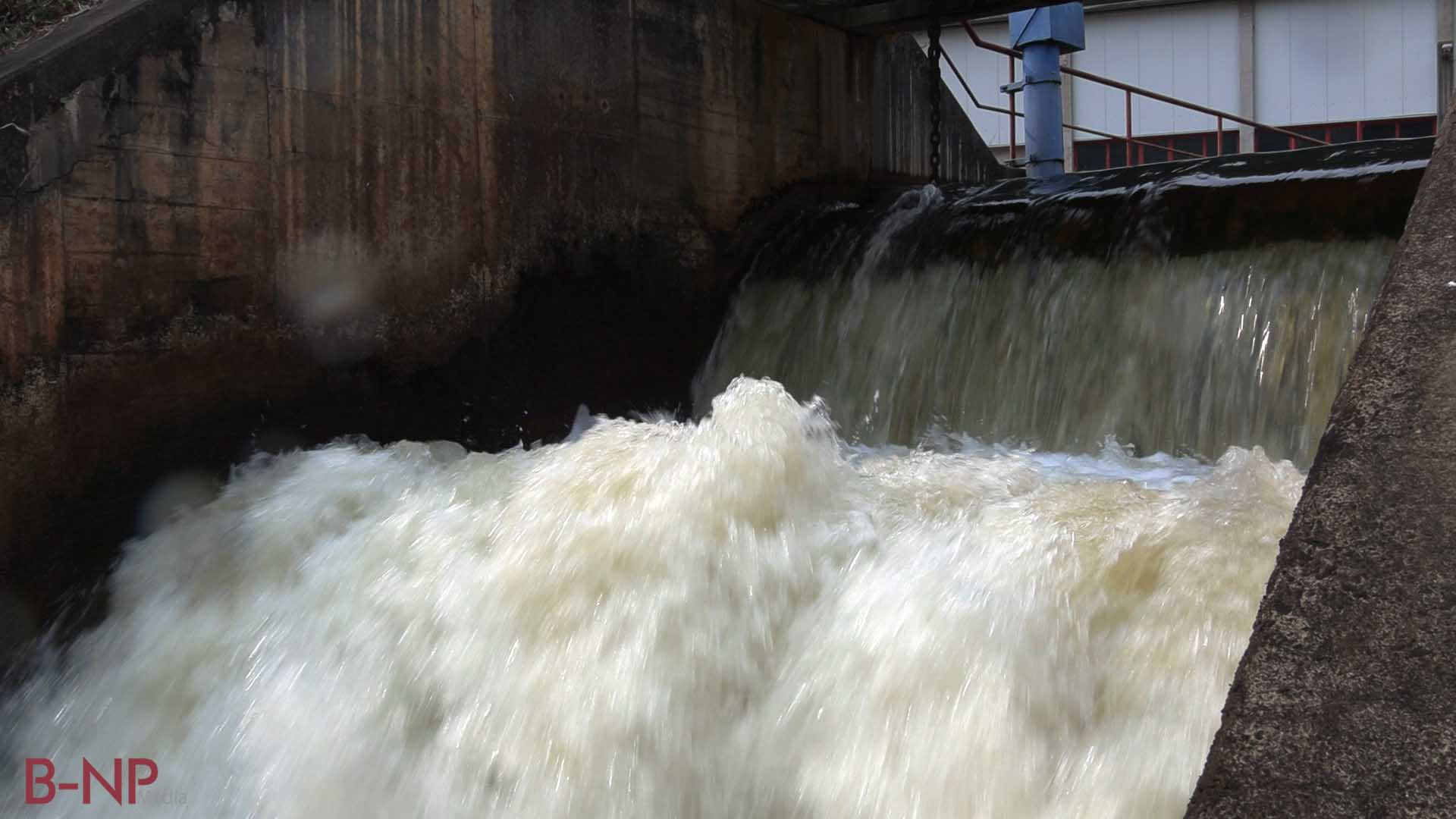
Burundi suffers from energy deficit despite favourable conditions (many waterfalls and rain that falls 9 months out of 12) and strong market demand (90 % of burundian population have no access to electricity). The country does not have enough energy infrastructures to satisfy that demand.
Burundi has an enormous hydroelectric potential. Studies show that it has 159 sites potentially viable. However, only 30 of them are tapped. A simple calculator is enough for any investor to understand how much they would earn if they invested in this sector.
97 % of the available electricity is produced by REGIDESO (the public authority in charge of water and electricity production), i.e. 30.8 MW. The remaining 3 % are ensured by OTB (Office du thé du Burundi) and ABER (Agence Burundaise d’Electrification Rurale).
Electricity: urban waste
90 % of the burundian population do not have access to electricity. Energy recovery from solid wastes can play a key role in solving this problem.
Look; one resident of Bujumbura (economic capital) produces, on average, 0.6 kilograms of solid wastes a day. It means 217 kilograms a year. And 57 % of this are fermentable. The population of this city is estimated at more than 1 million.
Other examples. In the urban center of Muyinga (northern-east Burundi), the total solid waste generation rate is 15,500 kg a day. In Ngozi city, it is 18,500 kg a day. In Kayanza urban center, 11.000. Burundi has 18 provinces. A calculator can help you to understand.
With such figures, an investor can do a lot. A bioenergetic industry would be at the same time, an innovation, a solution to electricity shortage and to a lack of cities cleaning. Furthermore, ZES-Burundi (Zone Economique Speciale Burundi), hosted by Warubondo site, avail spaces for any kind of investors.
Biomass Electricity Generation Plant
Burundi has a substantial biomass potential to be evaluated and utilized. For example, biomass fuel is obtainable from urban waste (households and industries). The country also generates a lot of plant and animal residues from its agriculture sector. Peat produce energy has great potential in Burundi as the country possesses a peat potential estimated at 600 million tons.
Supply of Solar Home Systems
The majority of energy consumers in Burundi, the DRC and Rwanda are households based in the rural areas (who are off-grid). Complete solar home systems with different configurations can be made available to the community to suit different needs and budgets. To increase the accessibility of the solar home systems, qualifying customers may pay for the solar home systems in instalments after an initial deposit has been paid.
The use of other energy sources, besides solar energy such as hydropower and wind, shall require a sizable amount of investment from an investor(s). The associated construction, installation of the machinery, equipment etc. to enable the energy to be generated and be available to the public shall also take time. Solar home systems and other solar products shall immediately, drastically reduce the prevailing energy deficiencies.
 English
  French